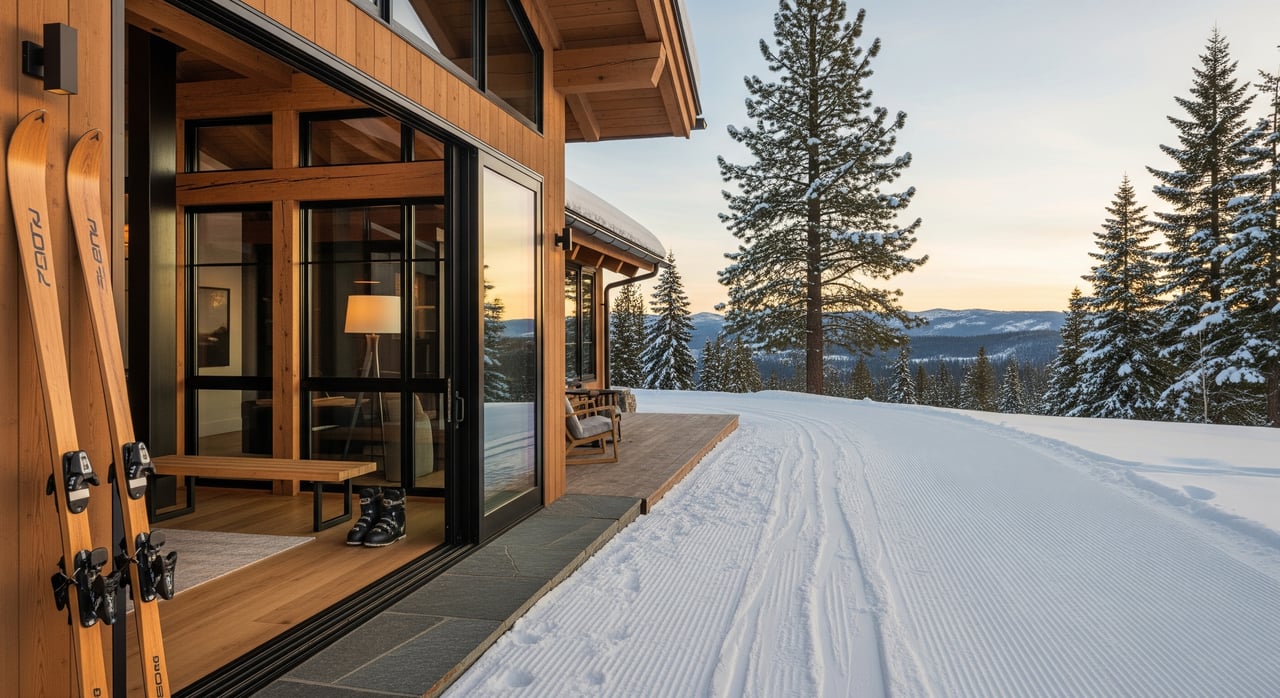
Your Northstar Ski-In/Ski-Out Guide for Property Buyers
November 21, 2025
November 21, 2025
You see “ski-in/ski-out” on a Northstar listing and picture stepping into your bindings at the door. In practice, the label can mean very different things. If you are comparing condos, townhomes, or Highlands estates from afar, clarity matters for both lifestyle and value. In this guide, you will learn exactly what counts as true ski-in/ski-out at Northstar, what is simply near-slope, how HOAs and Tahoe Mountain Club affect convenience, and the due diligence to run before you buy. Let’s dive in.
True ski-in/ski-out means you can exit your unit (or a very short, protected walkway) and step directly onto a groomed ski trail or skiway that takes you to lifts or back to the base without using public roads or long stairs. The route must be practical in typical snow conditions and supported by legal rights to cross any intervening property.
Ski-adjacent (often called ski-on/ski-off) requires a short walk, usually under about 200 yards, on plowed paths, paved walkways, or steps to reach a lift or the village. You may carry skis for that segment. Many listings market this as ski-in/ski-out, yet the daily experience is different from clipping in at the door.
Ski-access means you rely on a shuttle or a short drive and drop-off, then a brief walk or ride to the lift. This can still offer strong convenience, but it is not the same as door-to-trail access.
Northstar is organized around a central village with a network of groomed intermediate runs and connector trails. Village-edge buildings that back onto groomed corridors are the most likely to deliver true ski-in/ski-out. Some mid-mountain properties that touch groomed runs can also be true ski-in/ski-out if both the morning route out and the return route are practical.
Highlands homes are often larger-lot estates set above or near the village. Some have direct trail connections or private easements. Others require a short walk, a transfer to a groomed skiway, or use of a nearby drop area. You should verify access for each parcel rather than assume a universal standard.
Your daily convenience depends on whether your connecting corridor is a designated, groomed trail. Properties that benefit from resort grooming and snowmaking on nearby connectors tend to maintain access more days each season. Routes that rely on natural snow may lose usability in early or late season.
Buildings with on-site ski lockers, ski valets, and internal skiways that link entries to groomed corridors often deliver near door-to-slope convenience even if the literal threshold is not on the snow. These features reduce friction and protect your gear, which can feel functionally similar to true ski-in/ski-out.
In multi-building complexes, ground-level units that face the trail offer a different daily rhythm than upper-floor residences that require elevators, stairs, or internal corridors. The added transitions affect how “instant” the access feels during busy mornings and tired evenings.
Your HOA can make or break everyday access. Look for recorded easements and maintenance obligations tied to skiways, bridges, and snowmelt systems. Some HOAs fund private shuttles or maintain plowed pedestrian corridors. Guest policies and rental rules also vary by association and can influence both your use and potential income.
Tahoe Mountain Club (TMC) offers private amenities, events, dining, fitness, and services that raise convenience for second-home owners. Membership can add concierge help, ski valets, and private shuttles that smooth your day even if you are not on a slope. TMC is a lifestyle benefit rather than a legal access provider, so it does not create a skiway easement on its own. Confirm whether membership is included, optional, or subject to initiation fees and ongoing dues.
Properties with built-in resort conveniences, such as lockers, covered storage, valet, and immediate village access, typically command higher pricing than comparable units without those features. For Highlands estates, private garages, heated driveways, and direct trail easements (when present) are premium items. Verify which amenities are funded by the neighborhood HOA versus the resort or TMC, since costs and responsibilities differ.
True ski-in/ski-out homes and condos typically trade at a premium because of daily convenience and rental performance potential. The size of the premium depends on factors such as unit size, finishes, garage or parking access, HOA structure, and current demand.
In low-snow periods, routes that rely on natural snow at your doorstep can lose utility. If you want maximum reliability, focus on properties that touch groomed connectors or sit near corridors supported by snowmaking and routine grooming.
Accurate representation helps future resale. Buyers respond well when the access type is clear and documented, rather than broadly marketed. Photos, maps, and easement citations in your files can support pricing and reduce disputes later.
At Northstar, true ski-in/ski-out is both a physical reality and a recorded right. If you want the clip-in lifestyle, verify the exact route in both directions, review the easements, and weigh the reliability of grooming and snow management. If you prefer broader amenities and a social hub, strong HOA features and Tahoe Mountain Club can deliver near-slope convenience that fits weekend use and rental goals. With the right due diligence, you can match your priorities with the right village-edge condo, mid-mountain townhome, or Highlands estate.
Ready to evaluate a specific Northstar address or compare options side by side? Work with a local advisor who can walk the route, review documents, and help you weigh value with a finance-first lens. Connect with Lindsay Buchanan to start your home search.
Stay up to date on the latest real estate trends.
As your trusted real estate expert, I’m here to help you navigate property transactions with ease. I focus on understanding your unique needs to ensure a smooth buying or selling experience, always striving to achieve the best results for you.