Trying to decide the best way to get on the water in North and West Lake Tahoe? If you’re a weekender or an investor, lake access can shape both your lifestyle and your property’s appeal. The right setup can mean easy beach days, reliable boat storage, and less hassle during peak season. This guide breaks down your options in Kings Beach, Tahoe Vista, Carnelian Bay, and Agate Bay, plus the permits, practical tradeoffs, and due diligence that matter. Let’s dive in.
Lake access types at a glance
Understanding the access types helps you compare cost, convenience, and availability.
Public beaches and recreation areas. These are publicly owned shoreline parks with amenities like restrooms, picnic areas, and seasonal lifeguards at major sites. They’re simple, flexible, and great for guests. Expect limited parking and crowding on peak summer weekends.
Public boat ramps and launch facilities. Essential if you trailer a boat. Fees and hours vary, and you should plan for queues and tight staging areas on busy days.
Marinas, private slips, and transient docking. Commercial or municipal marinas offer slips, moorings, fuel, and storage. They provide secure mooring and services, but availability is limited and prices are higher. Waitlists are common.
HOA or shared shoreline facilities. Community-owned beaches, docks, buoys, and launches restricted to members. These can offer privacy and convenience, but access depends on HOA rules and fees. Transfer rules and guest policies vary.
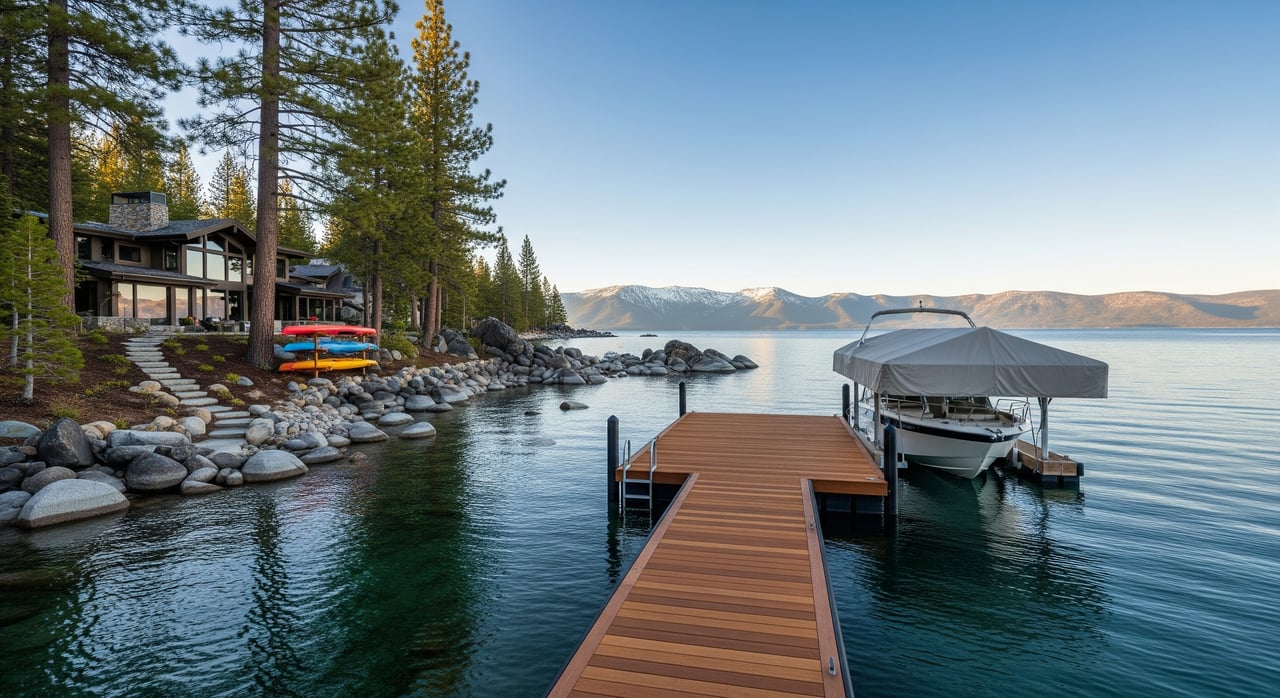
Private moorings, buoys, and individual docks. The most direct access for a single property. These require multi-agency permits, carry higher costs, and may have transfer limits when you sell.
What to expect by community
Kings Beach
Kings Beach State Recreation Area is the anchor public beach here. Many properties near the core can walk to the sand, with shops and services close by. Private docks are limited to smaller sections of shoreline, so frequent boaters often rely on nearby marinas or moorings. Expect summer-weekend crowding and metered or limited parking.
Tahoe Vista
Tahoe Vista offers small beaches and local recreation areas, plus proximity to broader community facilities depending on location. You’ll find a mix of walkable public access and small-scale HOA or shared shoreline facilities in nearby developments. Launch options are close, though you may need a short drive.
Carnelian Bay
Public access points and pocket beaches line portions of Highway 28, with a more residential shoreline feel elsewhere. Some subdivisions include HOA-managed amenities like small beaches, buoys, or shared docks. Many owners pair beach use with a marina slip or buoy in a nearby cove.
Agate Bay (near Tahoe City)
Tahoe City’s Commons Beach and marina make this corridor a central hub for west-shore access. Established public beaches and marina services are more prevalent nearby than in many north-shore pockets. If boating is a priority, review marina slip availability and transient docking rules early in your search.
Buying considerations that affect usability
Before you rely on any access, verify the details. Small differences in documents can make a big difference in your day-to-day use.
- Deeded vs. permissive access. Deeded rights recorded on title are the most secure. Historical or informal use is not guaranteed. Confirm with the title report.
- HOA rules and allocations. Review CC&Rs, rules, minutes, and reserve studies for slip or buoy allocation methods, guest policies, vessel limits, and any planned pier or shoreline projects.
- Transferability. Not all slips or buoys transfer with the property. Some are separate licenses that require approvals or assignments. Check for liens or unpaid assessments.
- Permits and legal status. For any private dock or buoy, request current permits and leases from the appropriate agencies. Unpermitted structures can be subject to removal and fines.
- Waitlists and supply. Marina slips and HOA buoys are scarce in peak season. Ask about wait times, owner-only rules, size limits, and seasonal schedules.
- Parking and staging. Confirm trailer parking, loading zones, and overnight rules near beaches or ramps.
- Seasonal and crowding impacts. Peak demand runs mid-June through August. Evaluate whether the access supports your intended frequency of use.
- Insurance and liability. Shared amenities and private moorings can affect insurance requirements and risk. Confirm coverage and responsibilities.
- Environmental and safety regulations. Understand local no-wake zones, speed rules, and any restrictions on certain motors or activities near shore.
- Maintenance and costs. HOA piers, docks, and buoy fields require ongoing funds. Ask about current dues and any known capital projects.
Which option fits your plan?
Match the access type to how you intend to use the lake and how often.
- If you value spontaneous beach days. Public beaches offer the most flexibility for quick visits and guests. Expect to plan around parking and peak times.
- If you boat frequently but don’t own waterfront. A marina slip or buoy provides reliable storage and faster launches. Budget for fees and potential waitlists.
- If you want privacy and convenience without going fully private. HOA facilities can balance access with reduced crowding, provided you confirm rules, costs, and transfer terms.
- If you need direct, private control. A permitted private buoy or dock is the most convenient, with the most complex permitting and highest costs.
Due diligence checklist for your offer
Use this list to structure your contingencies and document requests.
- Title and deed. Recorded beach rights, easements, or access agreements. Obtain copies.
- HOA and community documents. CC&Rs, bylaws, rules, minutes, reserve study, recent or pending assessments, and how slips or buoys are assigned.
- Permits and approvals. Current permits or leases from the relevant regional, county, and state agencies for docks, buoys, or boathouses, plus any conditions.
- Mooring or slip documentation. Contracts, proof of current fees, waitlist status, and transfer conditions.
- Marina inquiries. Fee schedules, size and draft restrictions, waitlists, and transient or guest policies if you rely on a commercial marina.
- Parking and staging. Trailer and overnight parking, loading zones, and enforcement hours.
- Insurance and liabilities. Policies related to shoreline facilities, plus any insurer conditions.
- Local code compliance. Confirm no outstanding violations or enforcement actions.
- Seasonal viability. Off-season closures, limited access, or winterization requirements.
- On-water rules. No-wake zones and speed restrictions, plus where patrols typically operate.
Cost and availability realities
Plan for limited supply during peak season. Public beaches can fill early, and marinas often manage long waitlists for slips or buoys. HOA facilities may limit use to owners, restrict vessel size, or allocate buoys by lottery or seniority. Fees, hours, and policies can change by season, so verify current conditions directly with the managing entity.
Permitting and who to contact
Lake Tahoe’s shorezone is regulated by multiple agencies. If you are evaluating a property with any private shoreline facility, confirm approvals with:
- Tahoe Regional Planning Agency. Shorezone and development review for docks, piers, and coverage.
- Placer County. Local permits, county codes, and some parks and access rules.
- California State Parks and other state water agencies. State recreation areas, certain piers, and some operational approvals.
- California Department of Boating and Waterways and State Lands Commission. Mooring programs and submerged-land leases.
- Lahontan Regional Water Quality Control Board. Water-quality permits for projects that impact the lake or involve fill.
- U.S. Army Corps of Engineers. Federal permits for applicable work in navigable waters.
- Local enforcement. Placer County Sheriff’s Boating Unit, California State Parks rangers, and TRPA enforcement for speed, wake, and safety rules.
Next steps
Clarify how you plan to use the lake, then tour communities at the times you expect to visit most. Compare the real-world parking, staging, and crowding picture at public beaches, and ask for documentation on any HOA or private facilities tied to a property. If you intend to keep a boat on the water, start conversations with marinas and HOAs early in your search.
If you want a finance-first strategy to align lifestyle access with long-term value, connect with Lindsay Buchanan for neighborhood-level guidance and a targeted search.
FAQs
Is public beach access the same as having a private dock?
- No. Public beach access is convenient for visits but does not provide secure boat storage or guaranteed dock space. A private dock, buoy, or marina slip offers mooring with added rules and costs.
Can I add a new private dock or buoy on the North/West Shore?
- Possibly. Approvals typically involve regional, county, and state agencies. Environmental and setback rules often limit new installations, and some areas restrict new private docks.
How common are HOA beaches and shared docks in North Lake Tahoe?
- Many subdivisions and condo communities offer some form of shared shoreline amenity, but scale and quality vary. Review the HOA’s documents to understand rights, rules, and fees.
Do boat slips or buoys transfer when a property is sold?
- It depends. Some are deeded rights tied to the property; others are rental licenses or HOA allocations that require separate assignment. Verify with title, marina contracts, and HOA policies.
What if a claimed dock or buoy has no permits on record?
- Unpermitted structures can face enforcement, fines, and removal orders. Require copies of current permits or leases before relying on any private shoreline facility.